Titlepage
Recollections of Full Years
By Helen Herron Taft.

Imprint
Imprint

This ebook is the product of many hours of hard work by volunteers for Standard Ebooks, and builds on the hard work of other literature lovers made possible by the public domain.
This particular ebook is based on a transcription from Project Gutenberg and on digital scans from the Internet Archive.
The source text and artwork in this ebook are believed to be in the United States public domain; that is, they are believed to be free of copyright restrictions in the United States. They may still be copyrighted in other countries, so users located outside of the United States must check their local laws before using this ebook. The creators of, and contributors to, this ebook dedicate their contributions to the worldwide public domain via the terms in the CC0 1.0 Universal Public Domain Dedication. For full license information, see the Uncopyright at the end of this ebook.
Standard Ebooks is a volunteer-driven project that produces ebook editions of public domain literature using modern typography, technology, and editorial standards, and distributes them free of cost. You can download this and other ebooks carefully produced for true book lovers at standardebooks.org.
Foreword
Foreword
I wish to express my grateful acknowledgment to Eleanor Franklin Egan and my daughter for their valued assistance in the preparation for publication of these Recollections.
Helen Herron Taft.
Frontispiece
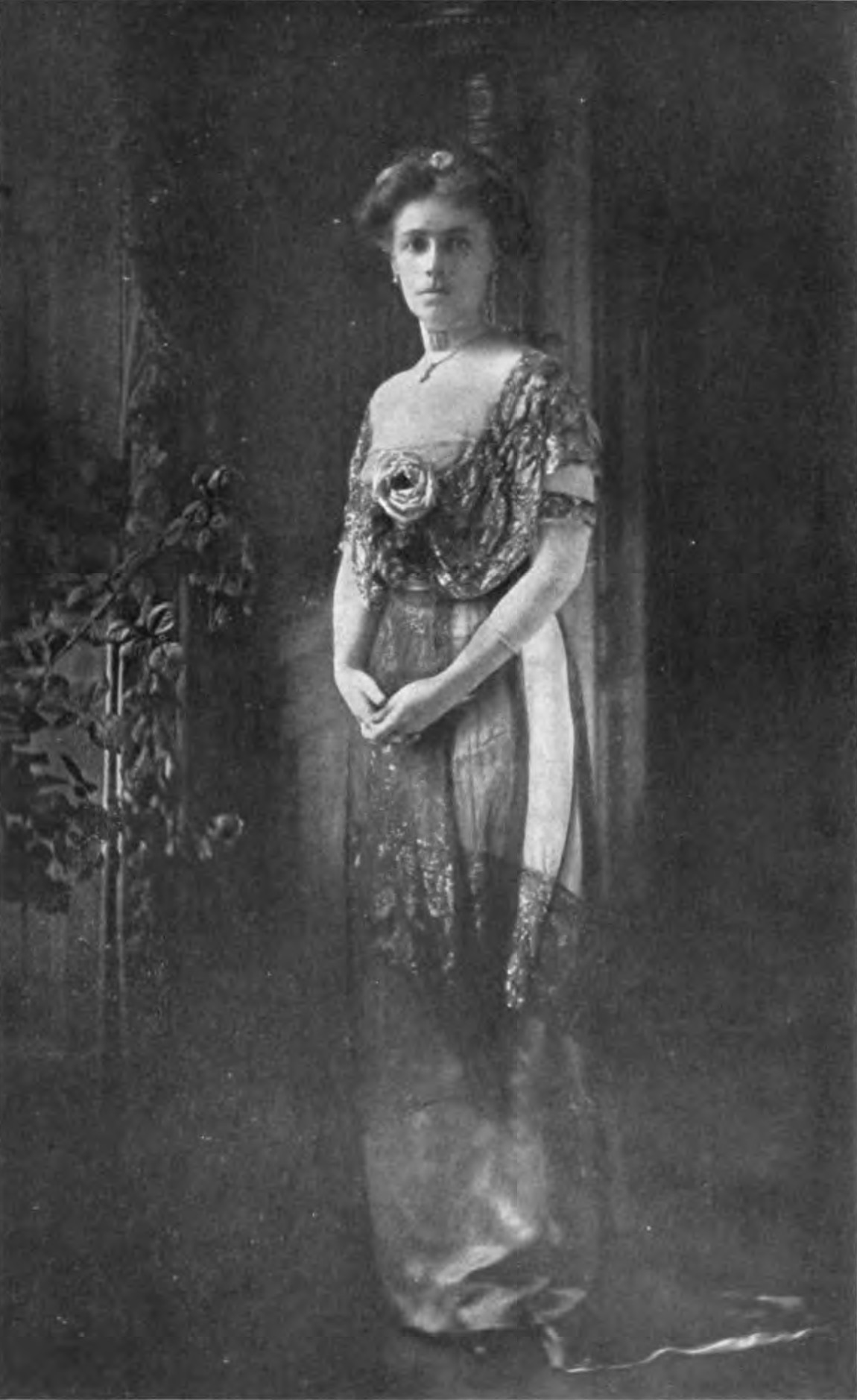
Recollections of Full Years
Recollections of Full Years
I: Introduction
I
Introduction
Cincinnati, the city of my birth and early memories, was, in the ’sixties, about as begrimed and noisy and altogether unattractive as any place well could be; yet it possessed certain attributes which really entitled it to the proud designation of “The Queen City of the West.”
It was prosperous; it had hardly yet been surpassed in prosperity by Chicago; Cleveland was not even spoken of as a rival; and in many ways it was the most important centre west of New York and east of the Mississippi.
It owed its early development principally to its advantageous location. It lay on the great central route from the East to the West, which runs from Baltimore and Washington to Cumberland and over the Alleghenies to Pittsburg, thence by the Ohio River to Cincinnati and on west to St. Louis and south to New Orleans. It had an important trade with New Orleans and drew commerce from a large territory to the north. But whatever else may be said of it, its most devoted citizen could not claim that Cincinnati was beautiful. Its buildings were unlovely; its streets were badly paved and as badly kept; and it lay under a pall of soft coal smoke which left its sooty mark upon everything—inhabitants included.
Yet, ugly as it was, the city boasted an unusual society. During the first half of the nineteenth century many young men of good stock and great ability, drawn by the promise of rapid advancement, had moved to Cincinnati from all parts of the East and South; New Jersey, New England, Virginia and Kentucky contributing, perhaps, the greatest number. There were many families of wealth and culture which, without parade or display, maintained fine homes and dispensed a generous hospitality. The suburbs, East Walnut Hills, Mt. Auburn and Clifton, on the heights to the north and east, were famous for their beautiful country places.
Then there was a large population of the best class of Germans, many of whom were university men who left their own country after the Revolution of 1848 and came to Cincinnati to settle. Of these, Frederick Hassaurek, General Willich and Judge Stallo, who came to Cincinnati when Carl Schurz went to St. Louis, are perhaps the most prominent. The German influence upon the community was marked. It made for a more liberal Sunday; it brought the study of German into the public schools; and it developed a strong taste for good music. Indeed, the musical advantages of Cincinnati in my girlhood were better than those of any city in the United States, with the exception of New York or Boston. Theodore Thomas was president of the Conservatory of Music and he organised a symphony orchestra which he continued to direct until he went to Chicago along about 1890.
Cincinnati in those days, with her educated, wealthy and public-spirited society, was much in advance of any other city in the Mississippi Valley in culture and refinement. There was great interest in schools of all sorts and in every kind of intellectual activity. Away back in 1848 the Literary Club of Cincinnati was formed by a company of men among whom were both Mr. Taft’s father and mine, as well as Rutherford B. Hayes, Stanley Matthews, Manning F. Force and Mr. Spofford, later Librarian of Congress. This club continues to be a cherished institution and in my girlhood it was the centre of all interest in literature and intellectual pursuits.
My father, John Williamson Herron, was a graduate of Miami University at Oxford, Ohio, and was in college with Benjamin Harrison. He was for fifty years a trustee of that institution and was devoted to its interests. My husband’s father, Judge Alphonso Taft, was one of the Yale class of 1833, was for many years a member of the Yale Corporation, and had five sons who graduated at that university. My mother’s brother, Judge Isaac Clinton Collins, and one of my two brothers also graduated at Yale, while my other brother graduated at Harvard, so it will be seen that both my husband and I grew up in the midst of strong collegiate traditions.
To write about one’s childhood is not easy. Memories by the score come flocking up, but, dear as they are, upon examination they turn out to be quite commonplace and hardly worth relating. My memories are not sufficiently “early” to have any special value. The first thing that I dimly remember is sitting on the front steps of my home watching some sort of parade in which there were many soldiers, but I was too young then to know that it was a peace celebration I was witnessing at the close of the Civil War.
My father was a lawyer who came to the bar of Ohio in the ’forties. He was United States Attorney under President Harrison, was a State Senator, and twice declined appointments to the Bench because the salary attached to these positions was not enough to support his large family. I was the fourth in a family of eleven, eight girls and three boys. One boy and two girls died before I can remember.
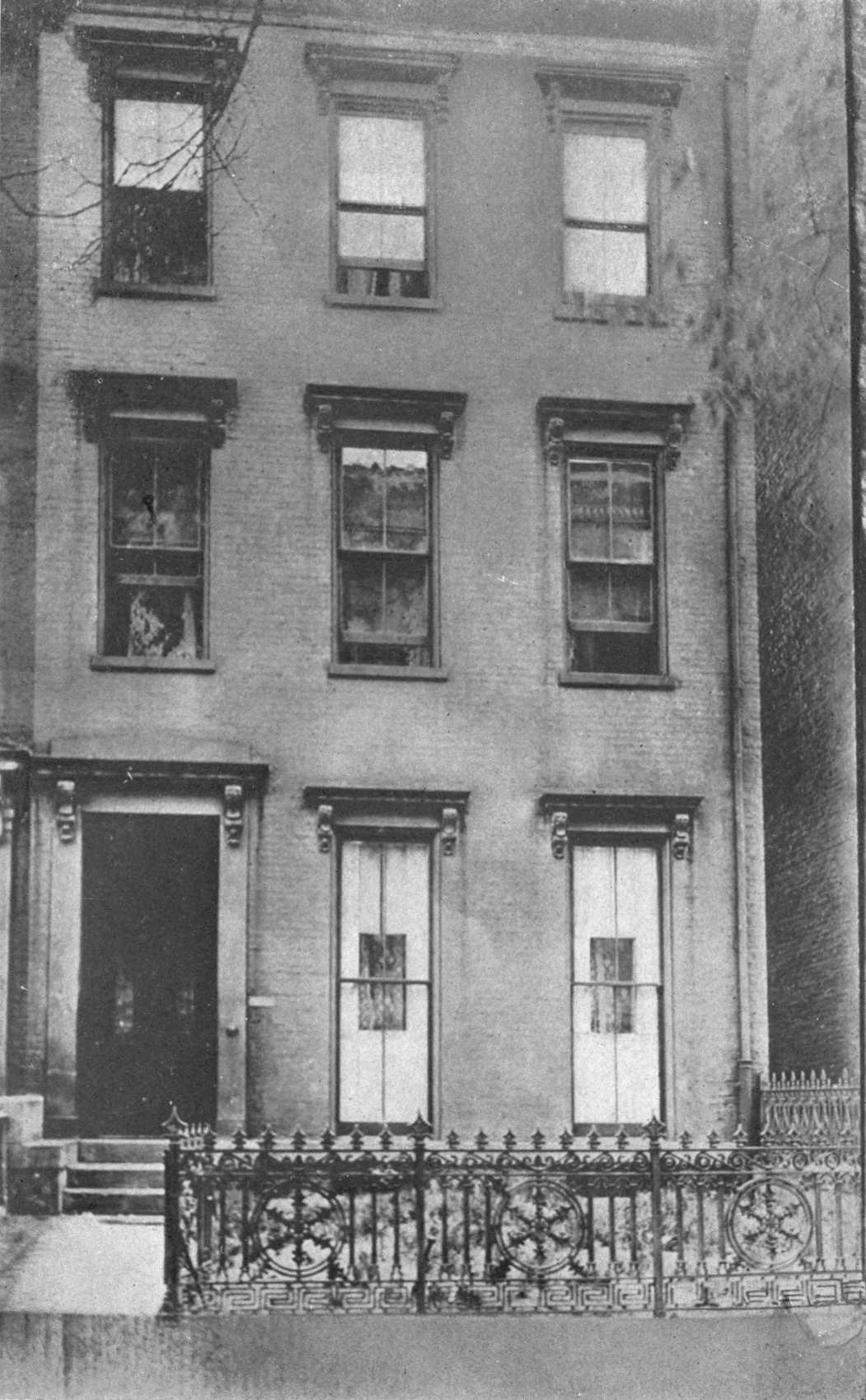
Our house was one of a block of grey brick houses in Pike Street, at the east end of Cincinnati, which, at that time, was the fashionable residence section of the city. Pike Street runs down to the river on a rather steep incline and, as it was paved with cobblestones, my early memories are somewhat marred by an impression of the frequent clatter and clang of heavy wagons pulling their way up the hill from the river landing.
While our house was not particularly distinguished, being much like those on either side of it, across the street from us there were two very striking and imposing residences which lent distinction to the neighbourhood, and in which, as I grew up, were formed the pleasantest associations of my life. The one directly opposite was a large, square, red brick house which had an air of great dignity. It was the home of Mr. Larz Anderson. There were ten boys in the Anderson family and, though they were all much older than I and most of them had gone away before I grew up, I remember that it was a very lively household always. In my later girlhood we were specially linked to this family by the marriage of one of the boys, Charles, to my sister Jennie.
The house next to Mr. Anderson’s, on the north, I knew as the Sinton home. A low, colonial structure, well set in a garden of green lawns and finely kept shrubbery, it is still one of the most beautiful residences in Cincinnati, and, indeed, in the whole country. Its architecture suggests that of the White House and it was, as a matter of fact, designed by the same architect, an Irishman named Hoban. The Sinton house is lower than the White House, being only one story high with a basement, but it has the same classic outlines and it bears, moreover, the stamp of time, which gives it a character all its own.
It was built about 1800 by a Mr. Martin Baum, but was purchased by the first Nicholas Longworth in the early part of the century and was the home of the Longworth family for a generation. Long before I can remember, it was bought by Mr. David Sinton, one of the most successful business men in Ohio, and to me it was always the Sinton home. When I was about twelve years old, Mr. Sinton’s daughter Annie married my husband’s brother, Charles P. Taft, and as they have always lived in this old house it has come to be known, since Mr. Sinton’s death in 1901, as the Taft house. It is the only Taft house in Cincinnati now, the house where my husband was born having been sold after his father’s death, and it has been the scene of many of the most important events of my life. It was there that my husband received the announcement of his nomination for the Presidency; it was there, in front of the house, that he made his speech of acceptance; and it was there that Charles Taft gathered a large party of friends on the night of November 6, 1908, to receive with us the election returns. And it is now to this house, where my husband’s brother Charles and his wife dispense a generous hospitality, that we always go when we return to Cincinnati.
My girlhood days were spent quite placidly in Miss Nourse’s school, which was known in Cincinnati as “The Nursery,” and where all the girls of the Herron family, as well as Mr. Taft’s only sister, Fanny, received their education. Miss Nourse was a Maine woman with a thorough New England education and with a thoroughly New England idea of imparting it. She insisted, especially, upon languages and literature. Much of my time, outside of that taken up in regular school work, I devoted to the study of music, and I practised my scales on the family piano with such persistence that I wonder the whole neighbourhood did not rebel. Music was the absorbing interest of my life in those days, the inspiration of all my dreams and ambitions.
Our house was none too large for the family, but as there was a wide difference in our ages it happened that my oldest sister was married while my youngest sister was still a baby in long clothes. Then, the boys went away to college and were gone the better part of each year, so it was not often that we were all at home together. Nevertheless, we had our share of the happy-go-lucky and somewhat crowded existence of a large family on a moderate income.
My mother was Harriet Collins, and when she was seventeen years old she came with her mother to Cincinnati, from Lowville, New York, to live with her brother, Judge Collins, who was my father’s law partner and continued to be so for more than forty years. Her father, Eli Collins, was a Member of Congress from the Lowville district of New York. My mother was in many ways a remarkable, as well as a most attractive, woman. She had an exceedingly keen wit and a mind alert to the humour in every situation. With so many children to nurse, to scold, to sew for and, sometimes, to cook for—in a word, to bring up on a small income—she would seem to have had little time for outside interests; but she was very popular in society and I remember that in her busiest years she went out a great deal. She had a stimulating personality and I do know that she made her family circle a very amusing and interesting one in which to grow up.
The only incident of my girlhood which was in any way unusual was my first visit to the White House as a guest of President and Mrs. Hayes. Mr. and Mrs. Hayes and my father and mother had been lifelong friends. Mr. Hayes was, at one time, a partner in my father’s law firm. They had been closely associated for a great many years and had a very warm regard for each other. My youngest sister was born shortly after the election of Mr. Hayes, was named Lucy Hayes Herron, after Mrs. Hayes, and was taken to the White House to be christened. My mother paid several visits to the White House and after my sister Jennie was married Mrs. Hayes invited her and Mr. Anderson to stay a week with her and, to my intense excitement, she added that she would like to have me accompany them. I was seventeen years old; I had never been to Washington and to me it was a very important event. I was not “out,” so I couldn’t spend my time in the White House as I would have liked, in going to brilliant parties and meeting all manner of charming people, but, fortunately for my peace of mind, the Hayes lived very quietly, so it was not so trying to have to devote myself to seeing the sights of the Capital like any other tourist.
I didn’t meet my husband until I was eighteen years old. We had been born and brought up in the same town; our fathers were warm friends and had practised law at the same bar for more than forty years; during that time our mothers had exchanged visits, and my sister Maria and Fanny Taft were schoolmates and close companions at Miss Nourse’s, but the Tafts lived at Mt. Auburn, a hill suburb of Cincinnati, and after Will finished Woodward High School he went for four years to Yale, so it is not at all surprising that we did not meet.