 foxing
Loading books
Public-domain books free to read
by Walter Bagehot
The nature and operation of British governance in the Victorian era is explained.
Opening
A few passages to enter the atmosphere.
The Cabinet
“On all great subjects,” says Mr. Mill, “much remains to be said,” and of none is this more true than of the English Constitution. The literature which has accumulated upon it is huge. But an observer who looks at the living reality will wonder at the contrast to the paper description. He will see in the life much which is not in the books; and he will not find in the rough practice many refinements of the literary theory.
It was natural—perhaps inevitable—that such an undergrowth of irrelevant ideas should gather round the British Constitution. Language is the tradition of nations; each generation describes what it sees, but it uses words transmitted from the past. When a great entity like the British Constitution has continued in connected outward sameness, but hidden inner change, for many ages, every generation inherits a series of inapt words—of maxims once true, but of which the truth is ceasing or has ceased. As a man’s family go on muttering in his maturity incorrect phrases derived from a just observation of his early youth, so, in the full activity of an historical constitution, its subjects repeat phrases true in the time of their fathers, and inculcated by those fathers, but now true no longer. Or, if I may say so, an ancient and ever-altering constitution is like an old man who still wears with attached fondness clothes in the fashion of his youth: what you see of him is the same; what you do not see is wholly altered.
There are two descriptions of the English Constitution which have exercised immense influence, but which are erroneous. First, it is laid down as a principle of the English polity, that in it the legislative, the executive, and the judicial powers are quite divided—that each is entrusted to a separate person or set of persons—that no one of these can at all interfere with the work of the other. There has been much eloquence expended in explaining how the rough genius of the English people, even in the middle ages, when it was especially rude, carried into life and practice that elaborate division of functions which philosophers had suggested on paper, but which they had hardly hoped to see except on paper.
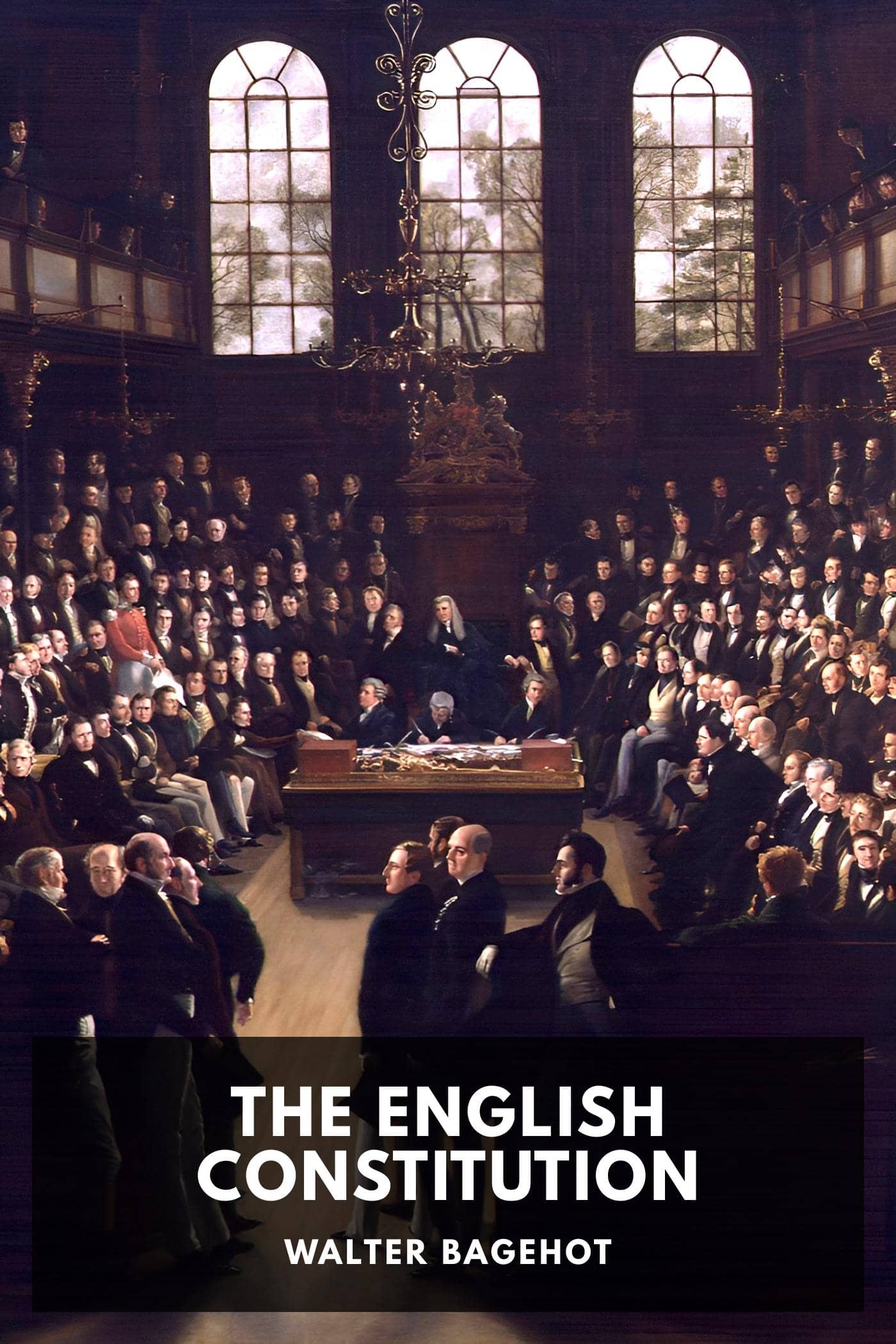
The English Constitution
Continue readingSecondly, it is insisted that the peculiar excellence of the British Constitution lies in a balanced union of three powers. It is said that the monarchical element, the aristocratic element, and the democratic element, have each a share in the supreme sovereignty, and that the assent of all three is necessary to the action of that sovereignty. Kings, lords, and commons, by this theory, are alleged to be not only the outward form, but the inner moving essence, the vitality of the Constitution. A great theory, called the theory of “Checks and Balances,” pervades an immense part of political literature, and much of it is collected from or supported by English experience. Monarchy, it is said, has some faults, some bad tendencies, aristocracy others, democracy, again, others; but England has shown that a Government can be constructed in which these evil tendencies exactly check, balance, and destroy one another—in which a good whole is constructed not simply in spite of, but by means of, the counteracting defects of the constituent parts.
The book is free to read. AI co-reading includes a limited free trial.
Open the reader