 foxing
Loading books
Public-domain books free to read
by Josiah Henson
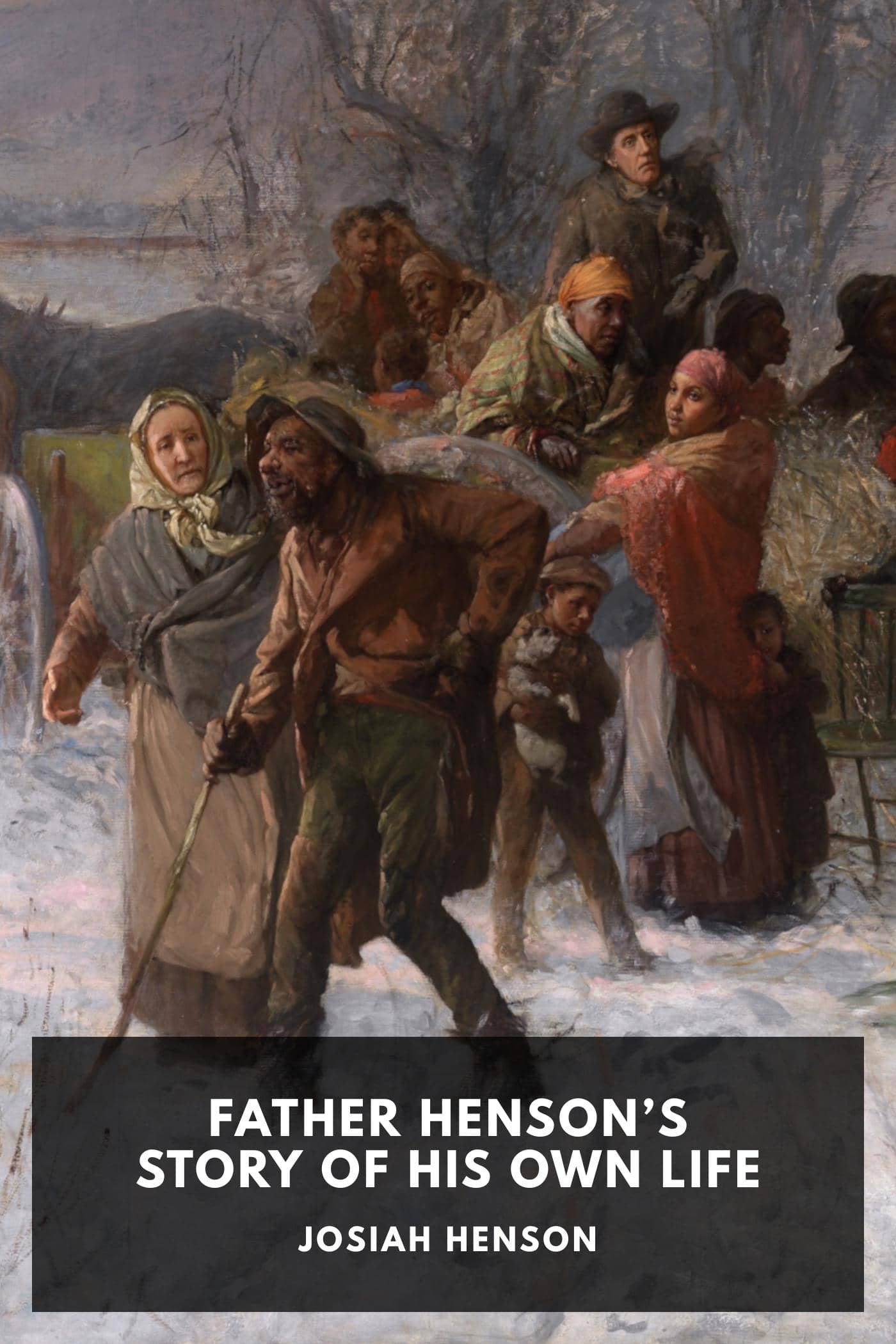
Josiah Henson’s autobiography recounts his life in slavery and his escape to freedom in Canada.
Opening
A few passages to enter the atmosphere.
My Birth and Childhood
Earliest Memories—Born in Maryland—My Father’s First Appearance—Attempted Outrage on My Mother—My Father’s Fight with an Overseer—One Hundred Stripes and His Ear Cut Off—Throws Away His Banjo and Becomes Morose—Sold South.
The story of my life, which I am about to record, is one full of striking incident. Keener pangs, deeper joys, more singular vicissitudes, few have been led in God’s providence to experience. As I look back on it through the vista of more than sixty years, and scene on scene it rises before me, an ever fresh wonder fills my mind. I delight to recall it. I dwell on it as did the Jews on the marvellous history of their rescue from the bondage of Egypt. Time has touched with its mellowing fingers its sterner features. The sufferings of the past are now like a dream, and the enduring lessons left behind make me to praise God that my soul has been tempered by him in so fiery a furnace and under such heavy blows.
I was born June 15th, 1789, in Charles County, Maryland, on a farm belonging to Mr. Francis Newman, about a mile from Port Tobacco. My mother was a slave of Dr. Josiah McPherson, but hired to the Mr. Newman to whom my father belonged. The only incident I can remember which occurred while my mother continued on Mr. Newman’s farm, was the appearance one day of my father with his head bloody and his back lacerated. He was beside himself with mingled rage and suffering. The explanation I picked up from the conversation of others only partially explained the matter to my mind; but as I grew older I understood it all. It seemed the overseer had sent my mother away from the other field hands to a retired place, and after trying persuasion in vain, had resorted to force to accomplish a brutal purpose. Her screams aroused my father at his distant work, and running up, he found his wife struggling with the man. Furious at the sight, he sprung upon him like a tiger. In a moment the overseer was down, and, mastered by rage, my father would have killed him but for the entreaties of my mother, and the overseer’s own promise that nothing should ever be said of the matter. The promise was kept—like most promises of the cowardly and debased—as long as the danger lasted.
Father Henson’s Story of His Own Life
Continue readingThe laws of slave states provide means and opportunities for revenge so ample, that miscreants like him never fail to improve them. “A nigger has struck a white man;” that is enough to set a whole county on fire; no question is asked about the provocation. The authorities were soon in pursuit of my father. The fact of the sacrilegious act of lifting a hand against the sacred temple of a white man’s body—a profanity as blasphemous in the eye of a slave-state tribunal as was among the Jews the entrance of a Gentile dog into the Holy of Holies—this was all it was necessary to establish. And the penalty followed: one hundred lashes on the bare back, and to have the right ear nailed to the whipping-post, and then severed from the body. For a time my father kept out of the way, hiding in the woods, and at night venturing into some cabin in search of food. But at length the strict watch set baffled all his efforts. His supplies cut off, he was fairly starved out, and compelled by hunger to come back and give himself up.
The book is free to read. AI co-reading includes a limited free trial.
Open the reader