 foxing
Loading books
Public-domain books free to read
by J. S. Fletcher
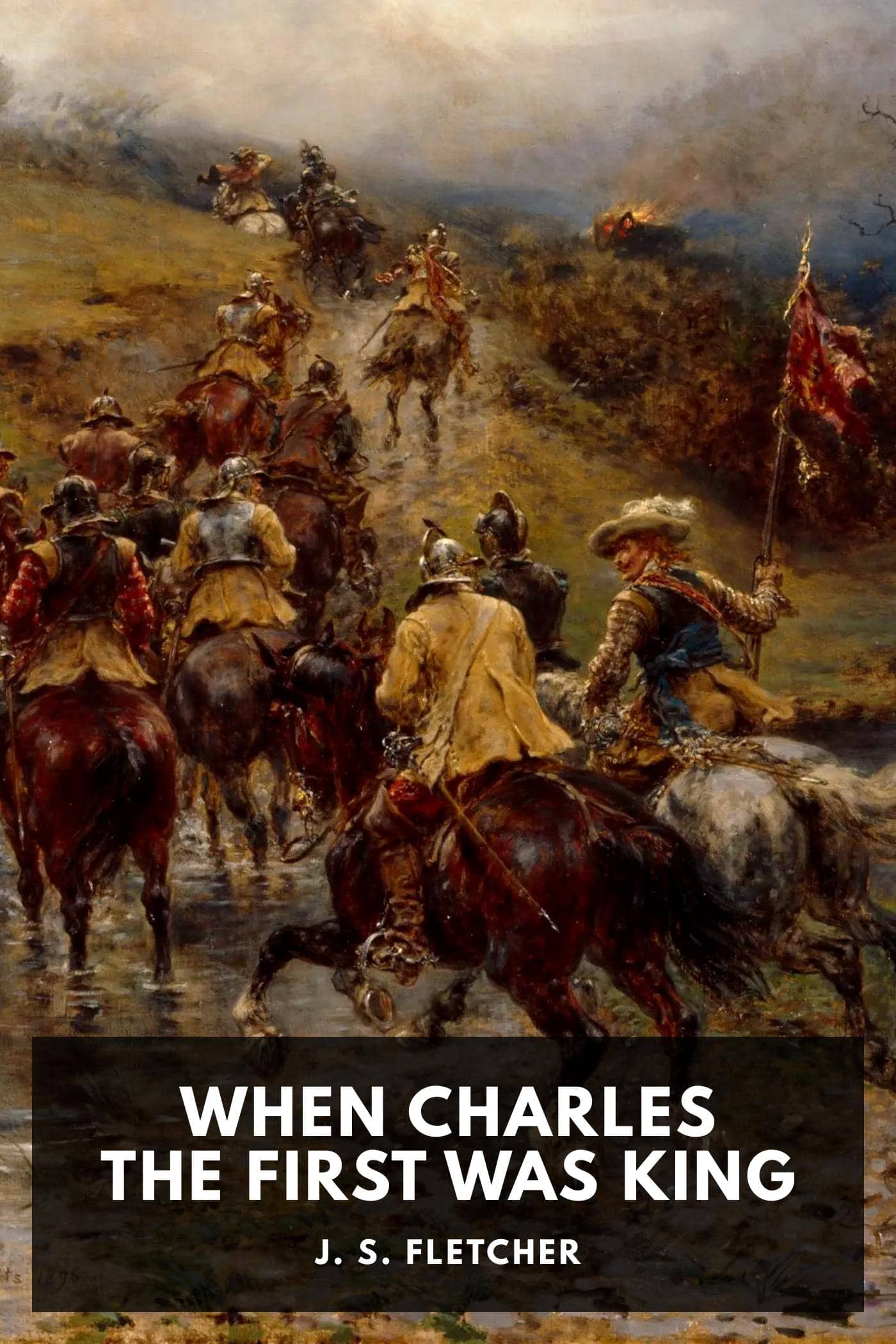
Serving for the Royalist cause affects the domestic life of a young Yorkshire farmer during the English Civil War.
Opening
A few passages to enter the atmosphere.
Of the Land I Live In
It may be thought by some, who from prejudice or ignorance are not in a position to judge properly of the matter, that there is nothing in this part of England which is worth writing of or describing, so strange are the views held by outsiders of us Yorkshiremen, so peculiar the ideas which many people have respecting our land, people, and manners. There is an impression beyond our borders that we are never so happy as when engaged in a horse-dealing transaction, and it is quite true that we are fond of trade in that direction, and bad to overreach when it comes to a question of hard bargaining. Nevertheless, it is not true that we think of nothing else but horse-dealing, any more than that our county—or, at least, some parts of it—is not to be compared for natural beauties with other shires which have achieved more fame in that way. I have heard travelled men discourse of the fine scenery and beautiful landscapes of Cumberland and Westmoreland, and of the grandeur of Devon and Cornwall, not to speak of Derbyshire and some parts of Wales, comparing divers districts of these to the country in Switzerland and Italy, which is, I understand, as fair as anything this earth can show; but, in spite of that, it has always seemed to me that our own three Ridings can exhibit as many pleasing prospects as man need wish for; so that a Yorkshireman casting his eyes upon them must needs thank God that he has been placed to live his life amongst such delectable spots. For we have hill and valley, and broad tracts of luscious meadow-land where you may feed a thousand head of cattle and never hurt the luxuriance of the grass, and our rivers are comparable for quiet beauty with Trent or Severn, and our rocky defiles are oftentimes as wild as anything that you will meet in Scotland or Cumberland. Then, again, our seaboard is such as few countries can show the like of, consisting as it does of rough promontory and rocky headland, joined with long stretches of brown sand, across which the North Sea’s waves come tumbling cold and icy from Norroway. Nay, when I begin to think in good earnest of the matter, and to remember what I have seen in other days—for I have travelled somewhat myself—I am certain that for diversity of scenery you may roam the wide world over and never find a country so fair, so rich in Nature’s gifts, so pleasing to the eye, as my native Yorkshire.
When Charles the First Was King
Continue readingAnd of all parts of this broad-acred land there is none which I so much love or admire as that in which the greater portion of my life hath been spent, though I indeed have seen the whole of the three Ridings, from Cronkley Fell to Featherbed Moss, and from Flamborough Head to Bowland Forest. There is a fine beauty about the dales of the North Riding, and I have seen sights upon the lonely wolds of Cleveland and Ryedale which did inspire me with feelings of awe and great wonder. And I have heard artists who understood these matters say that amongst those dales and hills there are scenes which not all the world can show the equal of. Howbeit I am no artist, though loving a good picture, but only a simple yeoman born and bred on the land, and never so happy as when breathing in the fresh air of a spring morning as it steals to your nostrils over the breadth of a new-ploughed field; and so, when it comes to a question of comparison between these districts, I give the palm to the broad meadow-lands and deep woods and gentle undulations of that corner of the West Riding where first I saw the light, where I have passed the greater part of my life to this present time, where, please God, I shall die and lie at peace.
If you will take your chart of Yorkshire and draw with your pen a straight line from Doncaster to Wakefield, from Wakefield to Wetherby, from Wetherby to York, from York to Goole, and from Goole to Doncaster again, you will have enclosed the tract of land of which I have spoken. I question if you can find throughout the length and breadth of England a similar piece of country more rich in historical associations, more odorous of national life, more beautiful in its own quiet way. Here we have no great mountains, no rushing rivers, no awesome valleys, but the land rolls along in richness of wood and stream, thorpe and hamlet, the gray spires and towers of village churches rising heavenward here and there, the red roofs of farmsteads, the tall gables of manors and halls peeping from the great groves of elm and beech and chestnut which stud the land everywhere in prodigal luxuriance. Right through this land runs the Great North Road like a silver streak, straight and direct, so that as I stand at my door o’ nights I can hear the carriers’ wagons rumbling north and south, and the quick gallop of horses hurried on by postboys fearful of highwayman and footpad, of whom in this year of grace, , there are still many left amongst us. Branching from this noble highway go roads right and left, making communications between our villages and market-towns easy, and being in a general way of speaking well kept. Right merry market-towns, too, are they of which I speak, and not to be put down by any of their fellows in England. For there is merrie Wakefield, with its bridge and chapel, where battles have been fought, and a king’s son foully slain, and where in old times bows were made of right good Yorkshire ash or willow; and there is Pontefract with its great castle, now falling into ruins, and its mighty Church of All Saints, and half a score of ancient religious houses; and there is Selby, with its glorious Abbey, whose towers and pinnacles you may see for many a square mile round about; and there is Wetherby, and Snaith, and Sherburn, and Thorne, each a fair market-town; and there is Goole, whence along the Ouse and Humber go ships even to the ports of Holland; and at the southern point there is Doncaster, breathing the air and spirit of English freedom; and at the northern there is York, the proud and beautiful city, whose great Minster looks forth across the embattled walls upon the broad lands beyond, like a fair mother watching her children. And between these market-towns, fenced in by wood and stream and meadow, and embowered in leafy hedgerows, stands many a smiling village and hamlet, with its old church and great manor or castle standing in the midst of broad parks and pleasaunces. Here and there, too, you may come across some homestead standing alone in its meadows and closes, and yet never so far from a village that its occupants are entirely neighbourless. A fair land and a rich it is, and dear to me, as I have already said, because it bore and nursed me, and has smiled upon me, year in, year out, when human eyes did not smile, comforting me by its very beauty when life seemed dark and inexplicable.
It was within four miles of the ancient and historic market-town of Pontefract, where kings have been imprisoned and done to death, that I, William Dale, yeoman, was born in the year of grace . The house wherein I first drew breath is that in which I now live; I trust in God it may shelter me to the end, and my children and grandchildren after me, for a right good house of stone it is, and was new tiled the year I came to man’s estate, by Geoffrey Scholes, the mason, of Campsall, who did good and honest work in whatsoever he undertook. As for situation, it lieth somewhat lonely, but at a good altitude, and the air round about it is exceedingly clear and pleasant to breathe. It stands on the left-hand side of the highway as you go from Doncaster to Ferrybridge, and is distant exactly one and a half miles from the crossroads at Darrington and about three-quarters of a mile from Wentbridge. There is no house stands near it—save one or two cottages that I builded for convenience’ sake, it being somewhat of a long way for the men to walk from the neighbouring villages, and the road nothing like safe o’ dark nights—nevertheless, we have never felt afraid of harm, albeit we were visited more than once in the troublous times by robbers, who thought to take advantage of our lonely position. However, they were but ill-requited for their pains, two of the rascals carrying away nothing better than a charge of lead in their persons, and the third being shot stone dead by my cowherd, Jacob Trusty, as he was striving to make forcible entry into the pantry window. Yet lonely indeed is the situation of Dale’s Field, and some more used to company might fear the long winter evenings which we spend here. No feeling of this sort ever came over myself, who knew that all around me lay my own good land, nigh four hundred acres of it, grass and arable, of which my fathers had reaped the harvest for many a generation. Dales of Dale’s Field there have always been since William the Conqueror came over; God knows whether there always will be, for I have seen ancient families dwindle away and vanish root and branch, so that even my own good old stock may possibly in time die out, and our homestead vanish from the face of the earth, and our acres, for which we have more than once stood much hard contest, even to blood-shedding, be swallowed up in the estates around them.1
The book is free to read. AI co-reading includes a limited free trial.
Open the reader