 foxing
Loading books
Books free forever
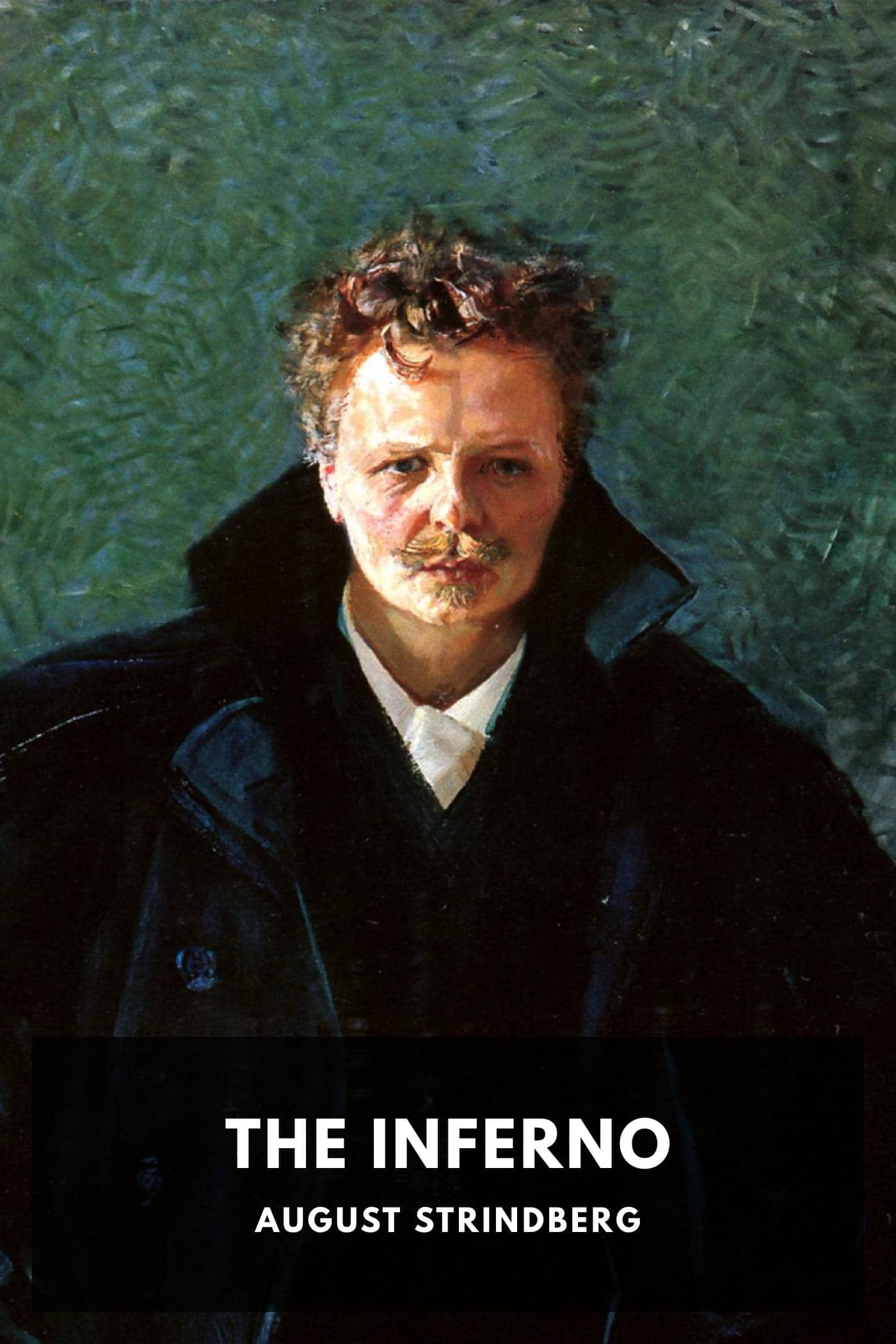
by August Strindberg
A writer succumbing to mania tries to find a path out through occultism and religion, in Strindberg’s semi-autobiographical novel.
Opening
A few passages to enter the atmosphere.
The Hand of the Invisible
With a feeling of wild joy I returned from the northern railway station, where I had said goodbye to my wife. She was going to our child, who was ill in a distant place. The sacrifice of my heart was then fulfilled. Her last words, “When shall we meet again?” and my answer, “Soon!” echoed in my ears, like falsehoods which one is unwilling to confess. A foreboding said to me “Never!” And, as a matter of fact, these parting words which we exchanged in November, 1894, were our last, for to this present time, May, 1897, I have not seen my dear wife again.
As I entered the Café de la Régence, I placed myself at the table where I used to sit with my wife, my beautiful jail-keeper, who watched my soul day and night, guessed my secret thoughts, marked the course of my ideas, and was jealous of my investigations into the unknown.
My newly-won freedom gave me a feeling of expansion and elevation above the petty cares of life in the great capital. In this arena of intellectual warfare I had just gained a victory, which, although worthless in itself, signified a great deal to me. It was the fulfilment of a youthful dream which all my countrymen had dreamed, but which had been realised by me alone, to have a play of one’s own performed in a Paris theatre. Now the theatre repelled me, as everything does when one has reached it, and science attracted me. Obliged to choose between love and knowledge, I had decided to strive for the highest knowledge; and as I myself sacrificed my love, I forgot the other innocent sacrifice to my ambition or my mission.
As soon as I returned to my poor student’s room in the Latin Quarter, I rummaged in my chest and drew out of their hiding-place six saucepans of fine porcelain. I had bought them a long time ago, although they were too dear for my means. A pair of tongs and a packet of pure sulphur completed the apparatus of my laboratory. I kindled a smelting-furnace in the fireplace, closed the door, and drew down the blinds, for only three months after the execution of Caserio it was not prudent to make chemical experiments in Paris.
The Inferno
Continue reading