Loading books
Books free forever
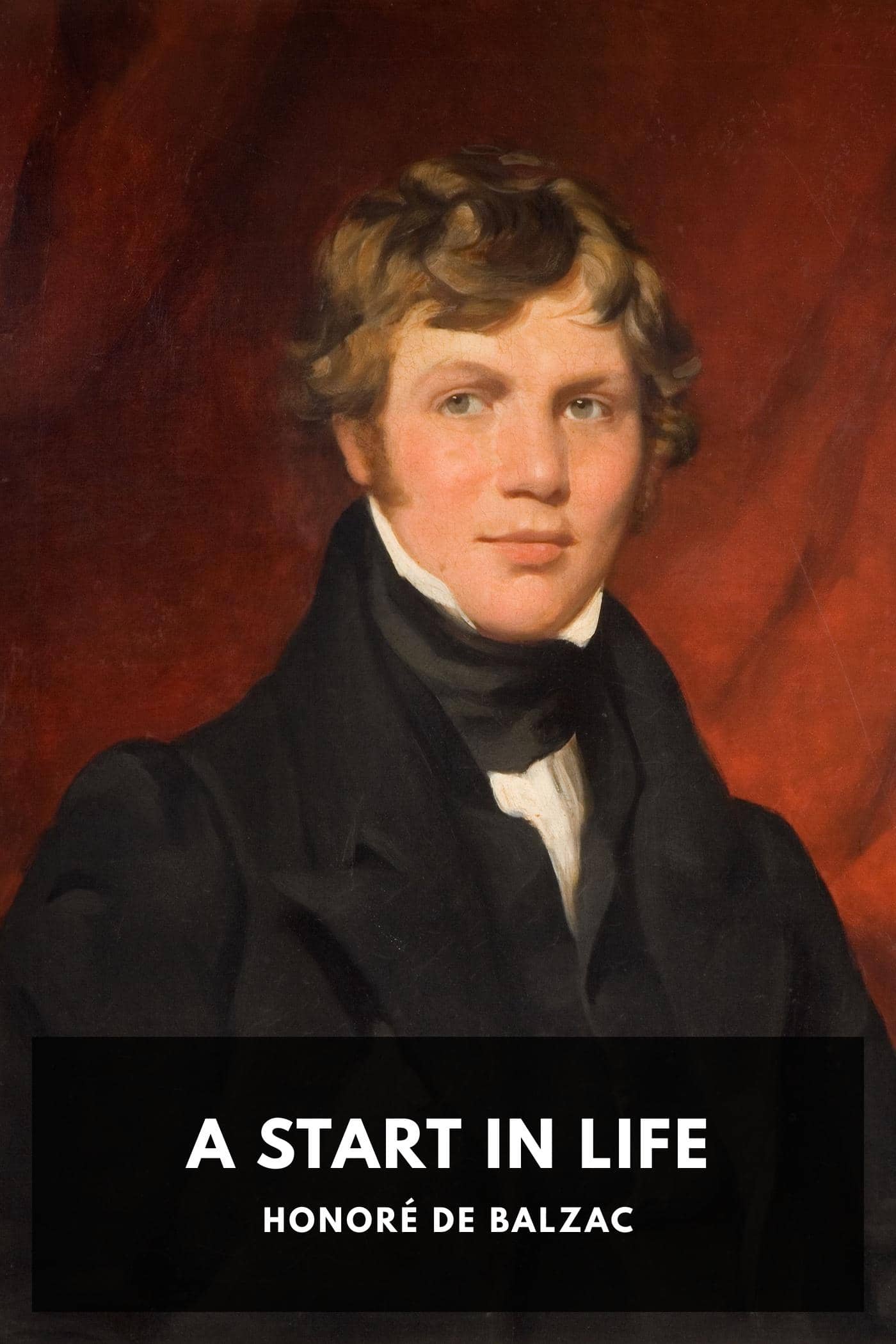
A Start in Life
by Honoré de Balzac
A young man ventures out on his own and suffers the consequences of his pride and impulsiveness.
Opening
A few passages to enter the atmosphere.
A Start in Life
Railroads, in a future now not far distant, must lead to the disappearance of certain industries, and modify others, especially such as are concerned in the various modes of transport commonly used in the neighborhood of Paris. In fact, the persons and the things which form the accessories of this little drama will ere long give it the dignity of an archaeological study. Will not our grandchildren be glad to know something of a time which they will speak of as the old days?
For instance, the picturesque vehicles known as Coucous, which used to stand on the Place de la Concorde and crowd the Cours-la-Reine, which flourished so greatly during a century, and still survived in 1830, exist no more. Even on the occasion of the most attractive rural festivity, hardly one is to be seen on the road in this year 1842.
In 1820 not all the places famous for their situation, and designated as the environs of Paris, had any regular service of coaches. The Touchards, father and son, had however a monopoly of conveyances to and from the largest towns within a radius of fifteen leagues, and their establishment occupied splendid premises in the Rue du Faubourg Saint-Denis. In spite of their old standing and their strenuous efforts, in spite of their large capital and all the advantages of strong centralization, Touchards’ service had formidable rivals in the Coucous of the Faubourg Saint-Denis for distances of seven or eight leagues out of Paris. The Parisian has indeed such a passion for the country, that local establishments also held their own in many cases against the Petites Messageries, a name given to Touchards’ short-distance coaches, to distinguish them from the Grandes Messageries, the general conveyance company, in the Rue Montmartre.
At that time the success of the Touchards stimulated speculation; conveyances were put on the road to and from the smallest towns—handsome, quick, and commodious vehicles, starting and returning at fixed hours; and these, in a circuit of ten leagues or so, gave rise to vehement competition. Beaten on the longer distances, the Coucou fell back on short runs, and survived a few years longer. It finally succumbed when the omnibus had proved the possibility of packing eighteen persons into a vehicle drawn by two horses. Nowadays the Coucou, if a bird of such heavy flight is by chance still to be found in the recesses of some store for dilapidated vehicles, would, from its structure and arrangement, be the subject of learned investigations, like Cuvier’s researches on the animals discovered in the lime-quarries of Montmartre.
A Start in Life
Continue reading