Loading books
Books free forever
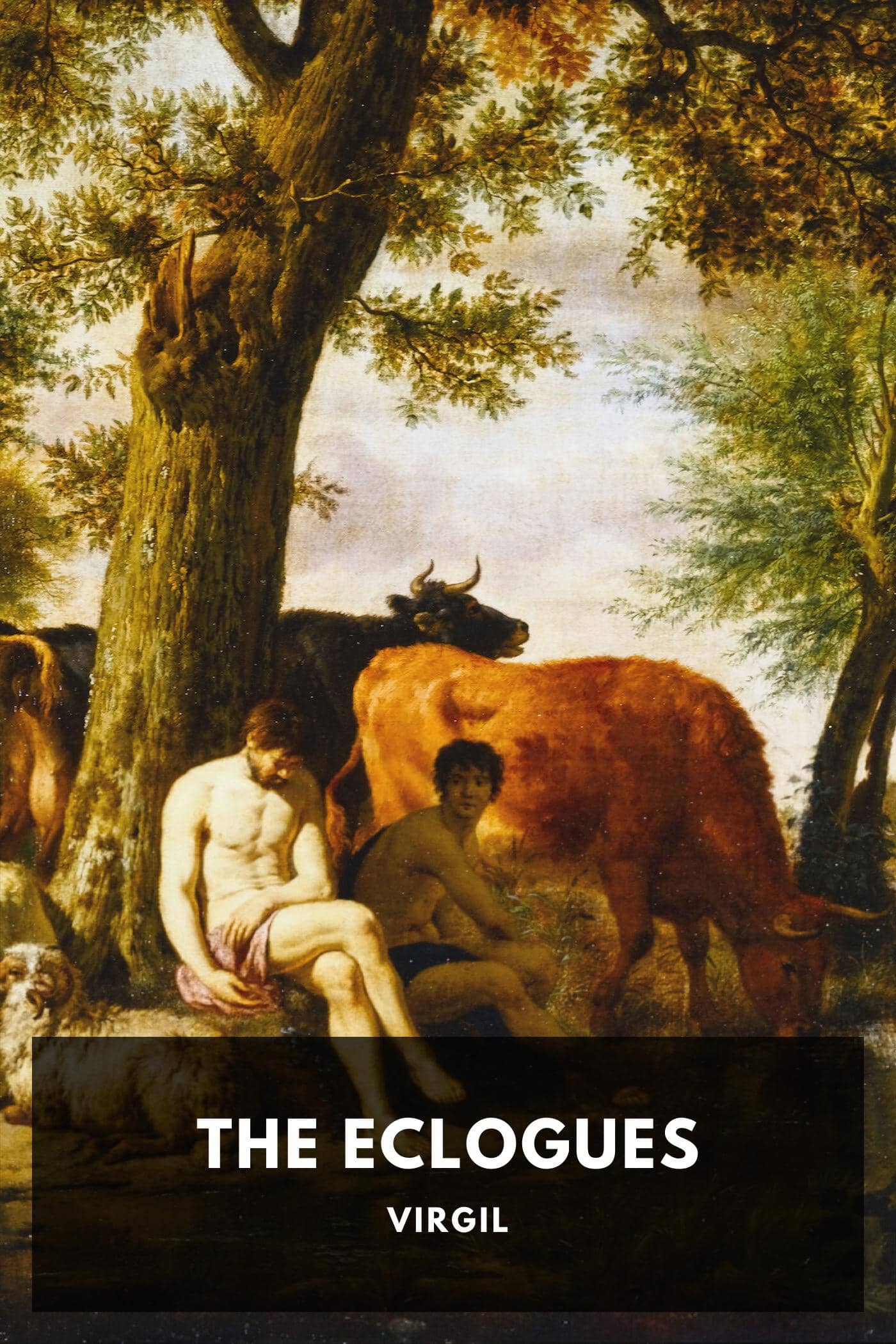
The Eclogues
by Virgil
Ten pastoral poems exploring themes of love, politics, and the impact of war.
Opening
A few passages to enter the atmosphere.
Pastoral I: Tityrus and Meliboeus
Pastoral I
Tityrus and Meliboeus
The occasion of the first Pastoral was this. When Augustus had settled himself in the Roman empire, that he might reward his veteran troops for their past service, he distributed among them all the lands that lay about Cremona and Mantua, turning out the right owners for having sided with his enemies. Virgil was a sufferer among the rest; who afterwards recovered his estate by Maecenas’s intercession, and, as an instance of his gratitude, composed the following Pastoral, where he sets out his own good fortune in the person of Tityrus, and the calamities of his Mantuan neighbours in the character of Meliboeus.
Beneath the shade which beechen boughs diffuse,
You, Tityrus, entertain your sylvan muse.
Round the wide world in banishment we roam,
Forced from our pleasing fields and native home;
While, stretched at ease, you sing your happy loves,
And Amaryllis fills the shady groves.
These blessings, friend, a deity bestowed:
For never can I deem him less than god.
The tender firstlings of my woolly breed
Shall on his holy altar often bleed.
He gave my kine to graze the flowery plain,
And to my pipe renewed the rural strain.
I envy not your fortune, but admire,
That, while the raging sword and wasteful fire
Destroy the wretched neighbourhood around,
No hostile arms approach your happy ground.
Far different is my fate: my feeble goats
With pains I drive from their forsaken cotes.
And this, you see, I scarcely drag along,
Who, yeaning, on the rocks has left her young;
The hope and promise of my failing fold.
My loss, by dire portents, the gods foretold;
For, had I not been blind, I might have seen:—
Yon riven oak, the fairest of the green,
And the hoarse raven, on the blasted bough,
By croaking from the left, presaged the coming blow.
But tell me, Tityrus, what heavenly power
Preserved your fortunes in that fatal hour?
The Eclogues
Continue reading