Loading books
Books free forever
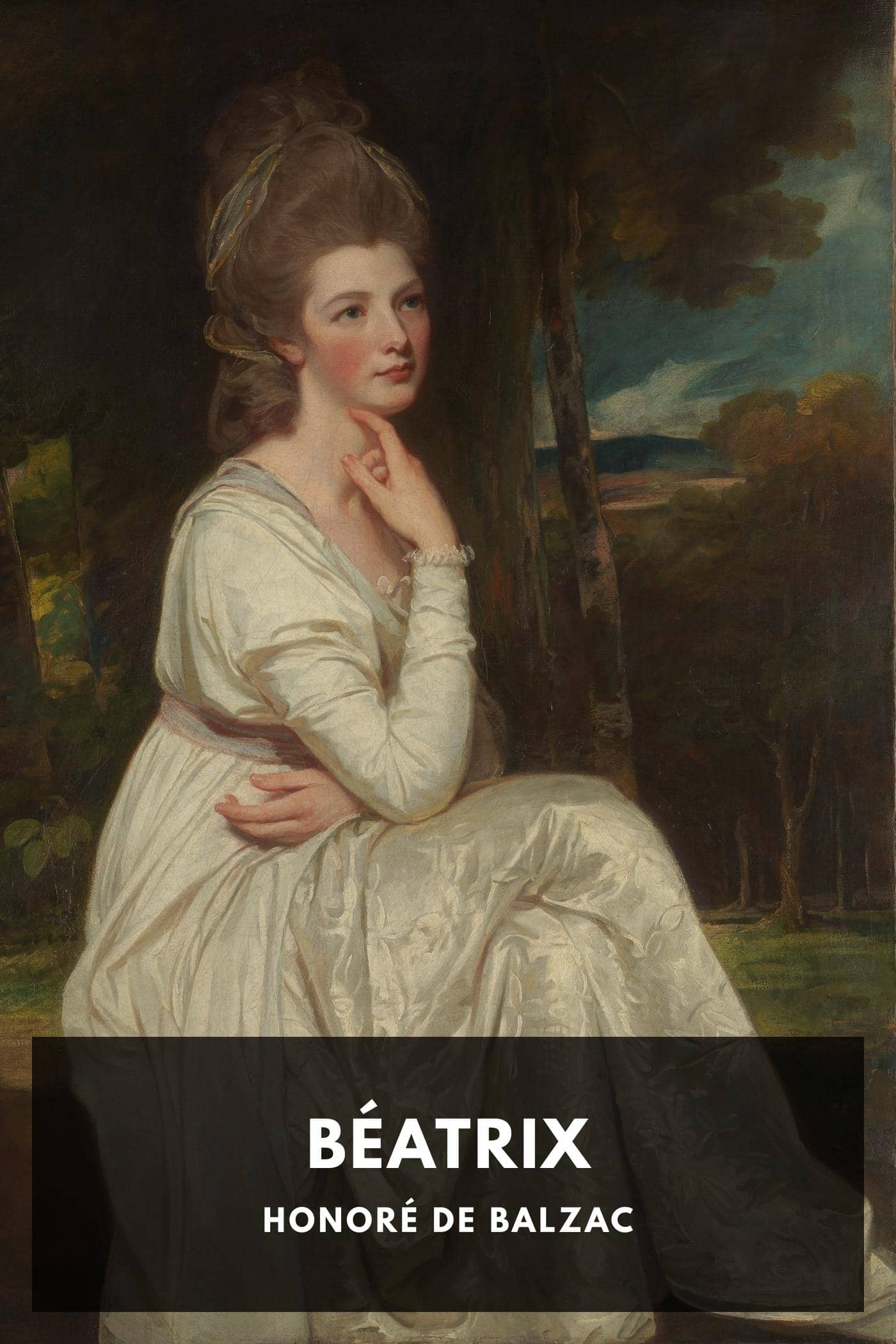
Béatrix
by Honoré de Balzac
A young man falls for an older woman, who introduces him to a friend in order to distract him.
Opening
A few passages to enter the atmosphere.
Part I: Dramatis Personae
Part I
Dramatis Personae
France, and more especially Brittany, still has some few towns that stand entirely outside the social movement which gives a character to the nineteenth century. For lack of rapid and constant communications with Paris, connected only by an ill-made road with the prefecture or chief town to which they belong, these places hear and see modern civilization pass by like a spectacle; they are amazed, but they do not applaud; and whether they fear it or make light of it, they remain faithful to the antiquated manners of which they preserve the stamp. Anyone who should travel as a moral archaeologist, and study men instead of stones, might find a picture of the age of Louis XV in some village of Provence, that of the time of Louis XIV in the depths of Poitou, that of yet remoter ages in the heart of Brittany.
Most of these places have fallen from some splendor of which history has kept no record, busied as it is with facts and dates rather than manners, but of which the memory still survives in tradition; as in Brittany, where the character of the people allows no forgetfulness of anything that concerns the home country. Many of these towns have been the capital of some little feudal territory—a county or a duchy conquered by the Crown, or broken up by inheritors in default of a direct male line. Then, deprived of their activity, these heads became arms; the arms, bereft of nutrition, have dried up and merely vegetate; and within these thirty years these images of remote times are beginning to die out and grow very rare.
Modern industry, toiling for the masses, goes on destroying the creations of ancient art, for its outcome was as personal to the purchaser as to the maker. We have products nowadays; we no longer have works. Buildings play a large part in the phenomena of retrospection; but to industry, buildings are stone-quarries or saltpetre mines, or storehouses for cotton. A few years more and these primitive towns will be transformed, known no more excepting in this literary iconography.
Béatrix
Continue reading