 foxing
Loading books
Books free forever
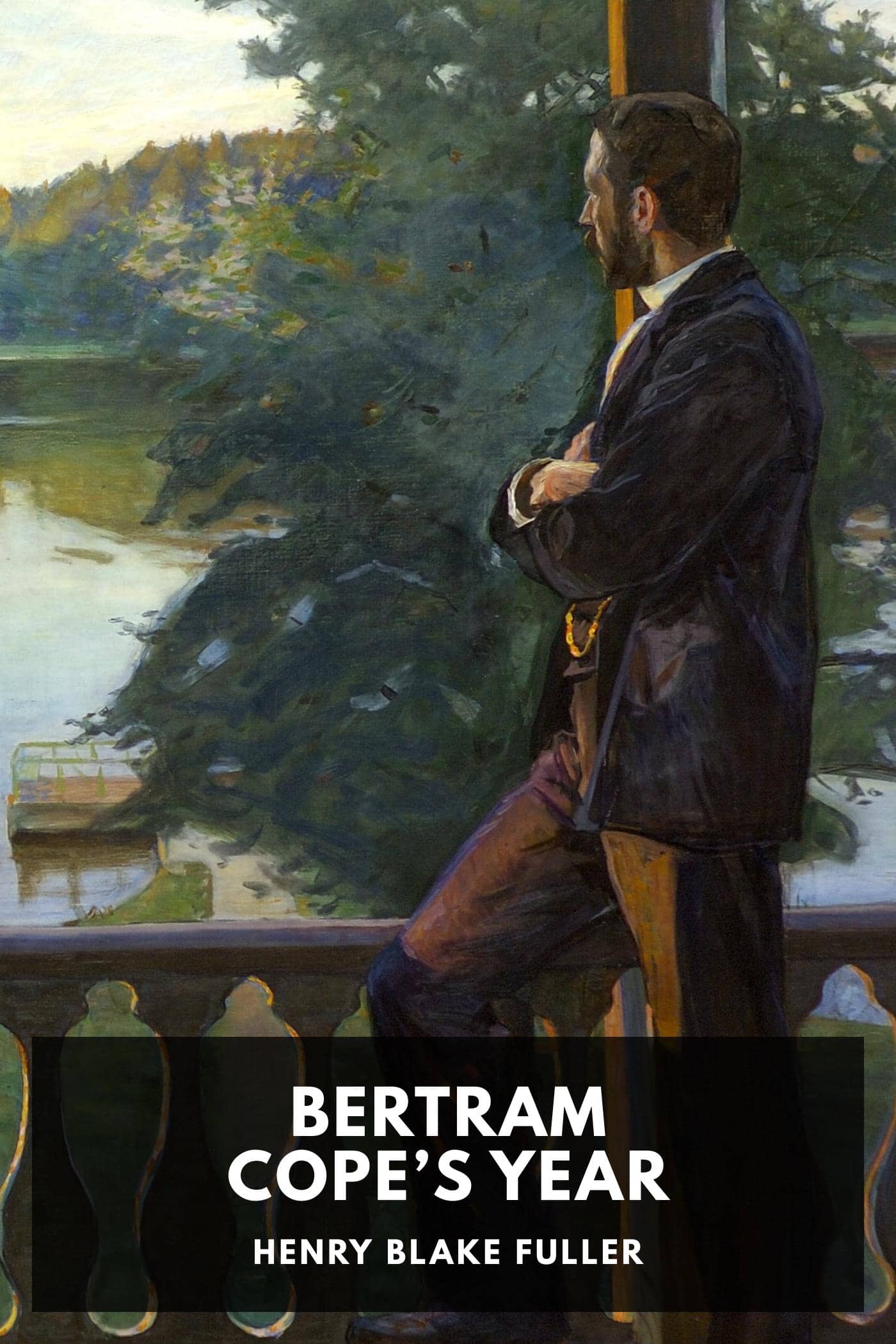
by Henry Blake Fuller
A young literature instructor navigates social and romantic complexities in a university town.
Opening
A few passages to enter the atmosphere.
Cope at a College Tea
What is a man’s best age? Peter Ibbetson, entering dreamland with complete freedom to choose, chose twenty-eight, and kept there. But twenty-eight, for our present purpose, has a drawback: a man of that age, if endowed with ordinary gifts and responsive to ordinary opportunities, is undeniably—a man; whereas what we require here is something just a little short of that. Wanted, in fact, a young male who shall seem fully adult to those who are younger still, and who may even appear the accomplished flower of virility to an idealizing maid or so, yet who shall elicit from the middle-aged the kindly indulgence due a boy. Perhaps you will say that even a man of twenty-eight may seem only a boy to a man of seventy. However, no septuagenarian is to figure in these pages. Our elders will be but in the middle forties and the earlier fifties; and we must find for them an age which may evoke their friendly interest, and yet be likely to call forth, besides that, their sympathy and their longing admiration, and later their tolerance, their patience, and even their forgiveness.
I think, then, that Bertram Cope, when he began to intrigue the little group which dwelt among the quadruple avenues of elms that led to the campus in Churchton, was but about twenty-four—certainly not a day more than twenty-five. If twenty-eight is the ideal age, the best is all the better for being just a little ahead.
Of course Cope was not an undergraduate—a species upon which many of the Churchtonians languidly refused to bestow their regard. “They come, and they go,” said these prosperous and comfortable burghers; “and, after all, they’re more or less alike, and more or less unrewarding.” Besides, the Bigger Town, with all its rich resources and all its varied opportunities, lay but an hour away. Churchton lived much of its real life beyond its own limits, and the student who came to be entertained socially within them was the exception indeed.
No, Bertram Cope was not an undergraduate. He was an instructor; and he was working along, in a leisurely way, to a degree. He expected to be an M.A., or even a Ph. D. Possibly a Litt.D. might be within the gift of later years. But, anyhow, nothing was finer than “writing”—except lecturing about it.
Bertram Cope’s Year
Continue reading