 foxing
Loading books
Books free forever
by Geoffrey Chaucer
A group of pilgrims trade tales as they travel through medieval England.
Opening
A few passages to enter the atmosphere.
When that Aprilis, with his showers swoot,1
The drought of March hath pierced to the root,
And bathed every vein in such licóur,
Of which virtúe engender’d is the flower;
When Zephyrus eke with his swootë breath
Inspired hath in every holt2 and heath
The tender croppës,3 and the youngë sun
Hath in the Ram4 his halfë course y-run,
And smallë fowlës makë melody,
That sleepen all the night with open eye,
(So pricketh them natúre in their coráges5);
Then longë folk to go on pilgrimages,
And palmers6 for to seekë strangë strands,
To fernë hallows couth7 in sundry lands;
And specially, from every shirë’s end
Of Engleland, to Canterbury they wend,
The holy blissful Martyr for to seek,
That them hath holpen, when that they were sick.
Befell that, in that season on a day,
In Southwark at the Tabard8 as I lay,
Ready to wenden on my pilgrimage
To Canterbury with devout coráge,
At night was come into that hostelry
Well nine and twenty in a company
Of sundry folk, by áventure y-fall
In fellowship,9 and pilgrims were they all,
That toward Canterbury wouldë ride.
The chamber, and the stables werë wide,
And well we weren eased at the best.10
And shortly, when the sunnë was to rest,
So had I spoken with them every one,
That I was of their fellowship anon,
And madë forword11 early for to rise,
To take our way there as I you devise.12
The Canterbury Tales
Continue reading
But natheless, while I have time and space,
Ere that I farther in this talë pace,
Me thinketh it accordant to reasón,
To tell you allë the condition
Of each of them, so as it seemed me,
And which they weren, and of what degree;
And eke in what array that they were in:
And at a Knight then will I first begin.
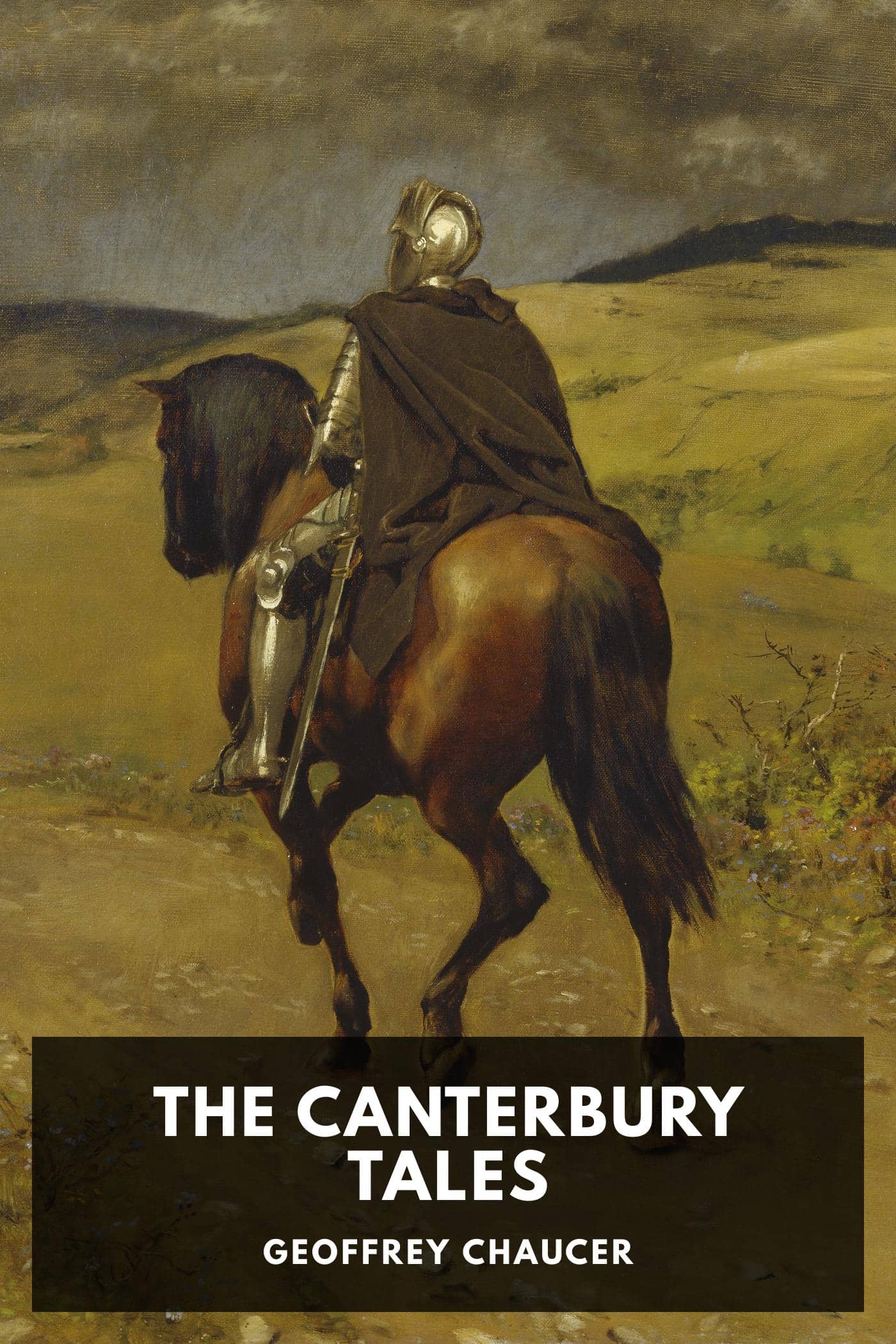
A Knight there was, and that a worthy man,
That from the timë that he first began
To riden out, he loved chivalry,
Truth and honoúr, freedom and courtesy.
Full worthy was he in his Lordë’s war,
And thereto had he ridden, no man farre,13
As well in Christendom as in Heatheness,
And ever honour’d for his worthiness.
At Alisandre14 he was when it was won.
Full often time he had the board begun
Above allë natións in Prusse.15
In Lettowe had he reysed,16 and in Russe,
No Christian man so oft of his degree.
In Grenade at the siege eke had he be
Of Algesir,17 and ridden in Belmarie.18
At Leyës was he, and at Satalie,
When they were won; and in the Greatë Sea19
At many a noble army had he be.
At mortal battles had he been fifteen,
And foughten for our faith at Tramissene.20
In listës thriës, and aye slain his foe.
This ilkë21 worthy knight had been also
Some timë with the lord of Palatie,22
Against another heathen in Turkie:
And evermore he had a sovereign price.23
And though that he was worthy he was wise,
And of his port as meek as is a maid.
He never yet no villainy24 ne said
In all his life, unto no manner wight.
He was a very perfect gentle knight.
But for to tellë you of his array,
His horse was good, but yet he was not gay.
Of fustian he weared a gipon,
Allë besmotter’d with his habergeon,25
For he was late y-come from his voyáge,
And wentë for to do his pilgrimage.
With him there was his son, a youngë Squire,
A lover, and a lusty bacheler,
With lockës crulle26 as they were laid in press.
Of twenty year of age he was I guess.
Of his statúre he was of even length,
And wonderly deliver,27 and great of strength.
And he had been some time in chevachie,28
In Flanders, in Artois, and Picardie,
And borne him well, as of so little space,29
In hope to standen in his lady’s grace.
Embroider’d was he, as it were a mead
All full of freshë flowers, white and red.
Singing he was, or fluting all the day;
He was as fresh as is the month of May.
Short was his gown, with sleevës long and wide.
Well could he sit on horse, and fairë ride.
He couldë songës make, and well indite,
Joust, and eke dance, and well pourtray and write.
So hot he loved, that by nightertale30
He slept no more than doth the nightingale.
Courteous he was, lowly, and serviceable,
And carv’d before his father at the table.31